Does Ipamorelin Cause Water Retention?
Puffiness appears in community accounts. Growth hormone offers a plausible explanation, but the studies leave its frequency and cause unresolved.
Puffy fingers, ankles and faces
Some people describe fuller fingers, swollen ankles or facial puffiness after ipamorelin. Tingling or numbness in the hands and feet appears in the same community record, sometimes attributed by the person reporting it to fluid shifts.
These are anecdotal accounts, not clinical evidence. They offer no controlled count of swelling, no verified comparison with older peptides and no way to separate ipamorelin from other compounds or changes in daily life.
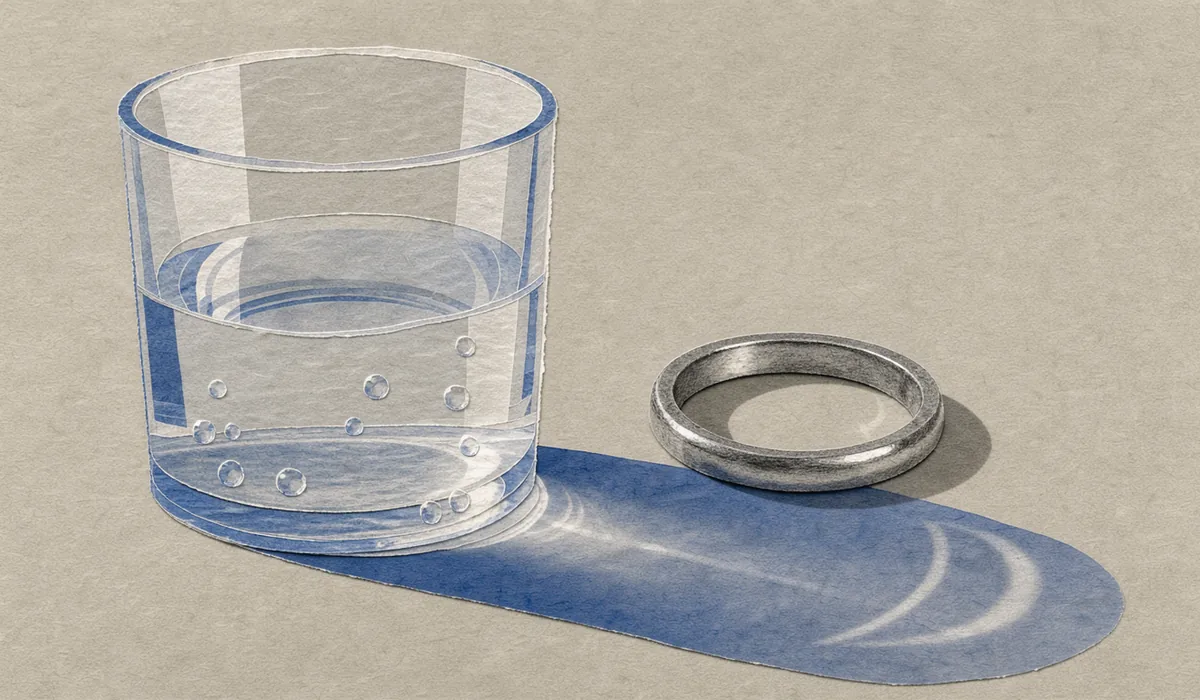
I sympathize with the desire for a straight answer. A ring that suddenly feels tight is tangible. The explanation offered for it still has to survive questions about salt intake, other medicines, and heart or kidney problems.
Hormone release and fluid retention
Growth hormone excess can encourage sodium and water retention and expand the fluid outside cells. That is the mechanism behind the concern, especially in someone already vulnerable to fluid overload.
The early ipamorelin experiments demonstrated growth hormone release. The human volunteer study found a brief hormone pulse and a terminal drug half-life of approximately 2 hours. Neither experiment established a water-retention rate for repeated use in people.
The short half-life gives me little reassurance about swelling. The blood measurement tells us how the compound's concentration fell. It supplies no direct measurement of tissue fluid.
What the patient trial counted
The published bowel-resection trial concentrated on the return to eating after surgery. It reported adverse events frequently in both treatment and placebo groups, without supplying a separate answer to this swelling question.
The study therefore supports neither a reliable percentage nor a claim that puffiness is harmless. The long-term human safety record is absent. I would put a prospective study measuring body water and following symptoms ahead of a tally assembled from scattered online reports.
Heart disease and significant swelling
Extra retained fluid matters in heart failure and other fluid-overload states. There is also a rat heart-injury finding for a different ghrelin-receptor agonist after 28 days. That experiment tested a related compound rather than ipamorelin, so its finding remains a class-level caution.
The combination of a plausible fluid mechanism and missing direct safety work is the reason the effects page treats cardiovascular questions seriously. Interpreting actual swelling requires clinical assessment of the person and its possible causes.
Does tesamorelin cause water retention?
That question often arrives alongside the ipamorelin query. Tesamorelin and ipamorelin are distinct compounds, acting through different routes to growth hormone release. The regulatory distinction remains: tesamorelin has a narrow approved use, and ipamorelin has no approved indication.
The papers collected here supply no tesamorelin-specific adverse-event rate. I will leave that percentage blank. Substituting ipamorelin anecdotes would make the comparison look more complete than the evidence allows.